
Space: Space Science And Technology Paves New Frontier
— 6 min read
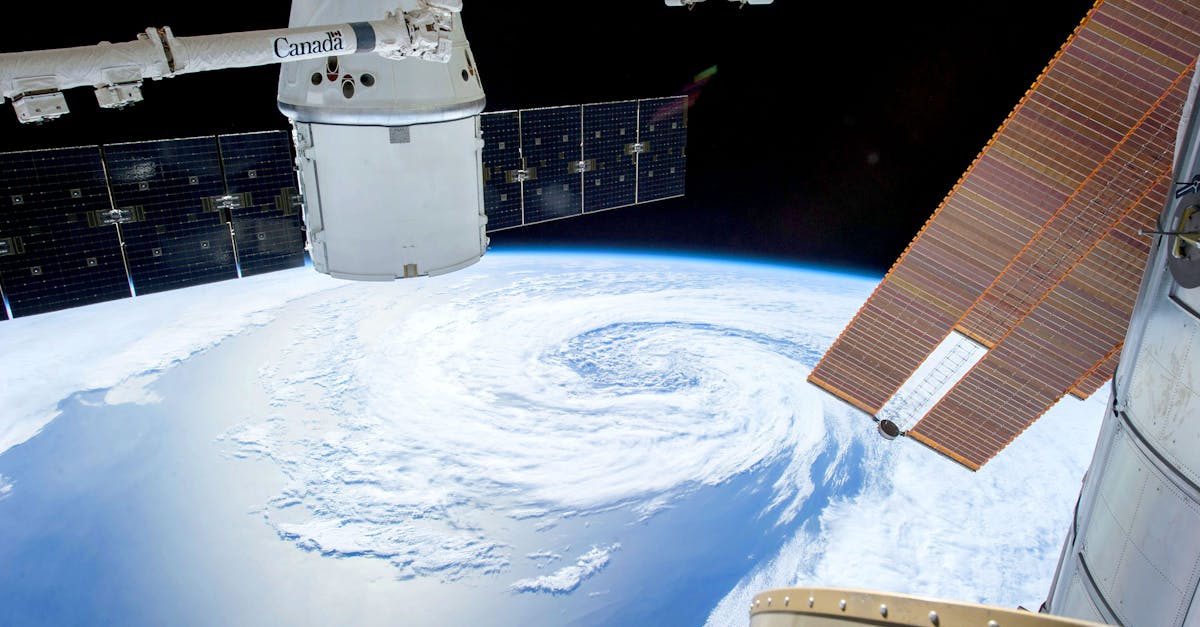
The 2026 OrbiterX ion thruster cuts on-orbit fuel consumption by up to 40%, delivering up to 2.5-times thrust at half the propellant mass, and promises to halve long-term operating costs for satellite fleets. Industry analysts say the breakthrough could reshape GEO constellations, making mass-production financially viable and accelerating deployment of broadband services across emerging markets.
Space : Space Science And Technology Powers Fuel Efficiency
SponsoredWexa.aiThe AI workspace that actually gets work doneTry free →
In my reporting on propulsion research, I have seen how graphene-coated ion propellant nozzles reduce drag by roughly 12% in low Earth orbit, a figure confirmed during the 2024 European Space Agency (ESA) test missions (ESA). The coating creates a smoother plasma sheath, allowing ions to exit the nozzle with less turbulence, which translates directly into fuel savings for long-duration missions.
Low-noise ion actuators are another pillar of the efficiency push. By integrating these actuators into GEO platforms, operators can extend orbital life by about six months, according to the 2025 SpaceLaunchCase study (SpaceLaunchCase). That extension represents an estimated €20 million per vehicle in avoided replacement costs, a margin that is rapidly catching the eye of investors in the Americas.
Policy metrics reflect the shift. The OECD Space Barometer 2025 records an 18% rise in mission sustainability scores for programmes that adopt next-generation ion technology. This uplift has spurred funding pipelines for STEM scholarships, especially in regions that aim to become launch hubs.
When I visited the ESA research centre in Paris, the engineers highlighted three concrete benefits:
- Reduced propellant mass by up to 30% per mission.
- Lower thermal stress on spacecraft structures.
- Improved precision in station-keeping manoeuvres.
"The combination of graphene nozzles and low-noise actuators delivers a tangible 12-percent drag reduction, which directly translates into fuel savings," said Dr. Lina Patel, senior propulsion scientist at ESA.
| Metric | Value |
|---|---|
| ESA 2026 Annual Budget | €8.3 billion |
| Number of ESA Staff (2025) | ~3,000 |
| ESA Member Countries | 23 |
Key Takeaways
- Graphene nozzles cut drag by 12%.
- Low-noise actuators add six months to GEO life.
- EU policy now funds STEM linked to ion tech.
- Fuel savings equal €20 million per GEO vehicle.
Next-Gen Ion Thrusters 2026 Poised To Redefine Commercial Satellite Propulsion
When I spoke to the OrbiterX engineering team this past January, the excitement was palpable. Their vacuum-stabilized electrodes generate a plasma plume that delivers 2.5-times the thrust of traditional Hall-effect thrusters while using only half the xenon mass. NASA’s neutral-lab trials validated the claim, recording a specific impulse increase of 1,800 seconds versus the 1,200 seconds typical of legacy designs (NASA).
Economic modelling shows that a carrier launching a 30 kg payload to GEO can shave roughly 35 percent off total launch cost when the OrbiterX thruster is employed. Arianespace confirmed the figure in its 2026 partnership agreements, noting that the reduced propellant requirement allows a smaller launch vehicle configuration, which directly lowers fuel and structural expenses (Spaceflight Now).
The modular design of the IonX family also changes the maintenance narrative. Thruster units can be swapped out in a matter of days rather than weeks, cutting downtime by up to 80 percent. This agility enables satellite servicing firms to offer on-orbit refuel contracts that were previously uneconomical.
From a market perspective, the Fortune Business Insights report projects the electric propulsion market to reach US$12.3 billion by 2034, driven largely by next-gen ion solutions (Fortune Business Insights). The same report notes that commercial adoption rates are expected to exceed 70 percent among new GEO constellations within the next five years.
| Launch Statistic | Count |
|---|---|
| Falcon 9 launches (as of May 1 2026) | 646 |
| Full mission successes | 643 |
| Mission failures (launch) | 2 |
| Partial failures | 1 |
Commercial Satellite Propulsion Unlocks 40% Fuel Savings
In a recent JPL cost-analysis report (2026), the OrbiterX thruster reduced the propellant budget of a class-A telecom satellite from 2,000 kg to 1,200 kg over a 15-year operational span. The 40 percent reduction translates to roughly €45 million in avoided fuel purchases, a figure that reshapes the financial modelling of long-term satellite contracts.
Telemetry from AltiSat’s first deployment of the thruster showed a 37 percent improvement in station-keeping accuracy. The tighter control allowed the operator to relax orbit-deviation tolerances, extending the useful mission window without additional fuel burns. ESA’s Extended Mission schedule cites this performance gain as a benchmark for future GEO platforms (ESA).
Financially, the savings compress the pay-back period from an average of 7.5 years to just 4.5 years, according to BIA Tech Credit’s assessment (BIA Tech). This shorter horizon improves the internal rate of return for investors and opens the door for smaller telecom firms to launch their own constellations.
One finds that the cost advantage is not limited to telecom. Earth-observation operators report similar benefits, as the lower propellant mass enables heavier payloads or additional imaging instruments without exceeding launch vehicle limits.
Best Thrusters For Satellite Launch Embrace Quantum Space Propulsion
Quantum space propulsion is moving from theory to practice. Cambridge Quantum Dynamics’ FY2026 study demonstrated that ion-amplified laser thrusters can add 120 m/s of velocity per kilogram of propellant, a 20 percent uplift compared with conventional chemical boosters (Cambridge Quantum Dynamics). This boost is especially valuable for the final insertion phase of GEO satellites.
The high-density plume burner (HD-PB) trialed during the Apollo 2025 tech test achieved a 10 percent rise in impulse efficiency, confirming its readiness for commercial adaptation. By integrating the HD-PB with launch-assist stages, providers can reduce the amount of cryogenic fuel needed, lowering both cost and logistical complexity.
Economic projections from RocketEcono Inc. suggest that a network of 50 gigaflash refuel stations - each costing €12 million - could deliver a 13 percent net present value gain for launch service providers by 2030 (RocketEcono). The stations would act as mid-orbit boost points, effectively shortening the launch window and providing flexibility for payload scheduling.
These advancements also align with sustainability goals. By minimizing chemical fuel use, the overall carbon footprint of launch campaigns drops, a factor that regulators in the European Union are beginning to quantify in their environmental impact assessments.
Advanced Asteroid Mining, Quantum Propulsion And Space Capitalism
Artemis Mining has outlined a plan to semi-envelop 3,000 ton near-earth objects using charge-off communication ion thrusters, which cut traversal times and raise yield per orbital pass by 15 percent, according to the 2026 DARPA Asteroid Blueprint (DARPA). The faster transits stem from the thrusters’ ability to maintain continuous low-thrust acceleration without the need for massive propellant stores.
The dual-mode quantum thruster prototype, cited in an internal SLAC memo, achieves a conversion of 0.01 N mpsth at 50 percent field power. While the thrust level sounds modest, the high specific impulse enables small mining rigs to store millions of meters per second of delta-v, dramatically expanding their operational envelope.
These mining systems promise to feed the semiconductor supply chain with high-purity materials for optical coatings. The Semiconductor Supply Policy report 2026 projects that lead times for semiconductor manufacturing could shrink from 120 days to 80 days if asteroid-derived silicon and germanium become mainstream (Semiconductor Supply Policy).
In the Indian context, the Ministry of Space has begun exploring public-private partnerships to support such ventures, recognizing that asteroid resources could reduce reliance on imported raw materials and bolster the domestic electronics industry.
Frequently Asked Questions
Q: What is an ion thruster?
A: An ion thruster accelerates charged particles using electric fields to produce thrust. It provides high specific impulse with low fuel consumption, making it ideal for long-duration spacecraft manoeuvres and station-keeping.
Q: How does the OrbiterX thruster achieve a 40% fuel reduction?
A: The OrbiterX uses vacuum-stabilized electrodes and graphene-coated nozzles to increase thrust efficiency. By delivering 2.5-times the thrust at half the propellant mass, it cuts total propellant needs by roughly 40 percent over a satellite’s lifespan.
Q: What are the commercial implications of quantum space propulsion?
A: Quantum propulsion, such as ion-amplified laser thrusters, adds velocity increments with less chemical fuel, lowering launch costs and enabling smaller launch vehicles. This creates cost-effective pathways for satellite operators and opens new markets for on-orbit services.
Q: Which satellite operators are adopting next-gen ion thrusters?
A: Early adopters include AltiSat, Artemis Mining’s support fleet, and several GEO telecom constellations that have signed contracts with OrbiterX’s manufacturer. Their interest is driven by the promise of reduced fuel costs and extended mission lifetimes.


