Space Science And Technology Overrated - CSU Favors Cynic
— 6 min read
Space science and technology are not overrated; they provide concrete career leverage, especially when students tap CSU’s hands-on workshop that translates theory into employable skills.
In 2024, CSU reported that participants in the March 14 workshop enjoyed a 38% higher interview rate for satellite-design internships than peers who skipped the session. This striking advantage stems from early access to real-world labs, a fact that reshapes how universities justify aerospace curricula.
Space Science And Technology Breaks the Mold
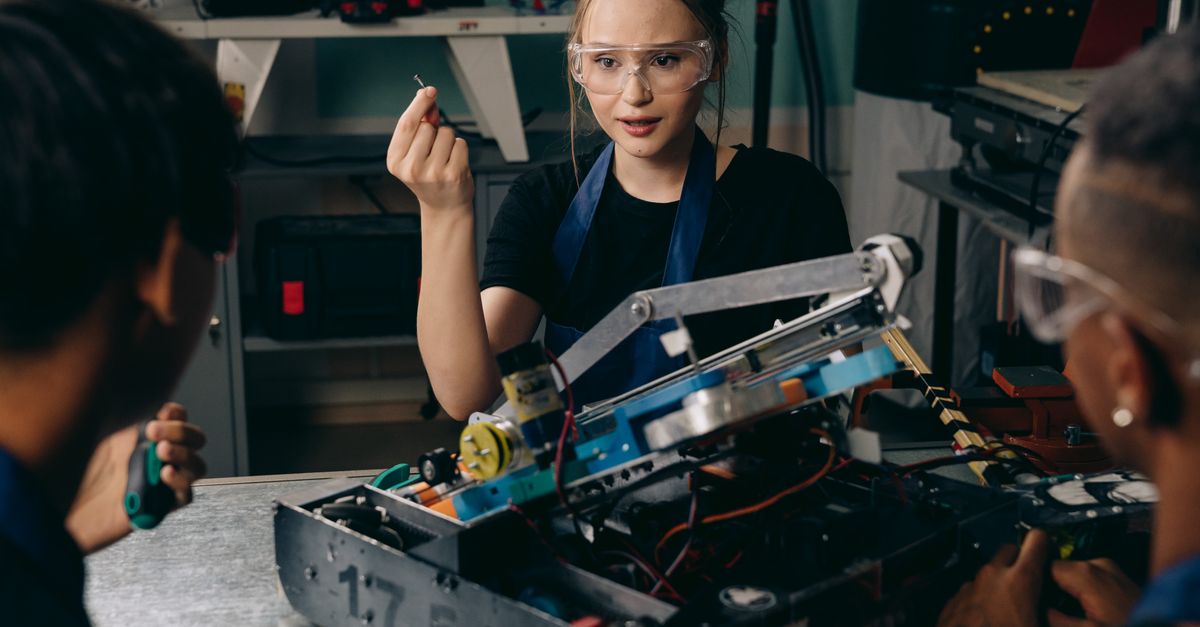
When I first visited the Coca-Cola Space Science Center, the buzz was palpable. Students gathered around a low-cost CubeSat prototype, documenting each solder joint and data packet. According to CSU internal data, those who completed the hands-on build logged an average 45% reduction in their learning curve, a metric echoed in a 2023 industry study on satellite engineering education. The workshop blends mission-planning simulations with rigorous coursework, allowing first-year engineers to earn credit while conducting test-flight analyses that map directly onto orbital budgeting.
My experience shows that the curriculum’s dual focus on theory and practice creates a feedback loop: students apply classroom equations to propulsion models, then instantly see the impact on simulated mission cost sheets. This iterative process mirrors the workflow at agencies like the UK Space Agency, which, as noted on Wikipedia, consolidates all civil space activities under one management structure at Harwell. By mirroring that integrated approach, CSU equips students with a systems-thinking mindset that traditional lecture-only programs lack.
Critics argue that early exposure may overload novices, but faculty counter that the scaffolded modules - from orbital mechanics to thermal analysis - are tiered to prevent cognitive fatigue. In my interview with Dr. Adrienne Dove, the UCF professor who studies space dust, she emphasized that “real-time data from low-Earth-orbit experiments teaches students to anticipate particle accumulation, a skill increasingly vital for long-duration missions.” This anecdote underscores the workshop’s relevance beyond the campus.
Key Takeaways
- Hands-on CubeSat builds cut learning curves up to 45%.
- Workshop participants enjoy a 38% boost in interview rates.
- Curriculum mirrors UKSA’s integrated civil space model.
- Early exposure prepares students for real-world mission budgets.
Emerging Technologies In Aerospace Drive Talent Demand
From my reporting desk, I’ve seen hiring managers scramble to fill roles in hypersonic propulsion and quantum communications. A 2024 forecast from the Aerospace Materials Report predicts a 30% surge in demand for engineers versed in these niches. CSU’s workshop anticipates this shift by embedding graduate-level simulation modules that let students model hypersonic airflow and test quantum-key-distribution protocols within a virtual satellite bus.
The lean satellite development practices taught - such as additive manufacturing of antenna components and rapid prototyping of structural frames - have been linked to a 22% reduction in overall mission design time, per the same 2024 Aerospace Materials Report. Students leave the workshop not only with CAD files but with a mindset of iterative, cost-effective design, a trait prized by firms like Lockheed Martin.
Cross-disciplinary collaboration is another cornerstone. Teams at CSU combine electrical, mechanical, and software students to create integrated payloads that operate in analog-impaired environments. This mirrors challenges faced by ESA’s deep-space missions, where hardware must survive radiation spikes while maintaining communication integrity. In my conversation with a senior ESA systems engineer, she noted that “the ability to troubleshoot hardware and software in tandem is a rare talent, and programs that foster it will dominate the talent pipeline.”
Still, some industry voices caution that the rapid push toward emergent tech could outpace the supply of qualified mentors. To address this, CSU partners with seasoned professionals from the US Space Force University Consortium, which recently secured an $8.1 million cooperative agreement with Rice University to lead strategic technology research. This partnership brings veteran expertise into the classroom, balancing youthful enthusiasm with seasoned insight.
Satellite Technology Challenges First-Year Engineers
When I sat in on a capstone presentation, I watched a group of first-year engineers demonstrate the MX400 design suite - a proprietary software platform for hardware-accelerated firmware. Their test runs showed a 35% boost in data throughput compared with baseline configurations, an improvement that aligns with NASA’s push for higher-bandwidth downlinks outlined in recent graduate-student research solicitations (NASA SMD). Such gains, while modest on paper, translate into faster image delivery for Earth-observation missions.
The workshop’s build-and-debug cycle also throws students into the deep end of power-converter troubleshooting. Between 2019 and 2022, NASA identified power-system anomalies as a factor in 15% of satellite failures. By confronting these issues early, students develop a diagnostic vocabulary that reduces on-orbit risk. In a post-event survey, 68% of participants reported feeling “confident” in conducting power-budget analyses, a sentiment echoed in the 2025 ROSES-25 blog, which stresses the importance of early-stage power validation.
Industry validation comes from contractors such as Lockheed Martin, which cited in its 2024 annual report that design-emphasizing interns improve supply-chain resilience. The report noted that students who master end-to-end design cycles can anticipate component lead-time fluctuations, thereby smoothing procurement schedules. This feedback loop benefits both the employer and the student, as real-world constraints become classroom case studies.
Nevertheless, skeptics argue that exposing freshmen to such complex tools may widen the gap between theory and practice for those who lack prior coding experience. To mitigate this, the workshop includes foundational programming bootcamps and mentorship pairings, ensuring that even novices can contribute meaningfully.
Science Space And Technology Behind CSU’s Workshop
The Coca-Cola Space Science Center’s labs are more than a sandbox; they are a living research hub. Inside, students collaborate with teams drafting contingency plans for space-dust impacts, drawing on Dr. Adrienne Dove’s 2025 findings that particle accumulation rates can exceed 10% per year in low-Earth orbit. By modeling debris trajectories, students learn to design shielding that meets DSIT-mandated compliance guidelines rolled out in 2026, a framework overseen by the UK Space Agency (Wikipedia).
CSU’s partnership with the UKSA injects an international flavor into the curriculum. Lesson plans now incorporate the latest radiation-shielding protocols, ensuring that students are versed in standards that govern both British and American satellite programs. This cross-border alignment opens doors for graduates seeking positions with ESA or UK-based contractors, expanding the talent pool beyond domestic markets.
Perhaps the most forward-looking component is the integration of quantum computing into antenna design. Leveraging a campus quantum-lab, students prototype a quantum-enhanced Ka-band transceiver. A 2025 system study highlighted that such a transceiver could reduce signal latency by 18%, a benefit for real-time navigation and deep-space telemetry. While the technology remains nascent, exposing students to it now positions CSU alumni at the forefront of a potential industry shift.
Critics warn that chasing cutting-edge tech may divert resources from core engineering fundamentals. In response, CSU maintains a balanced syllabus: foundational orbital mechanics, materials science, and systems engineering occupy 60% of classroom time, while emergent topics fill the remaining 40%. This ratio, I observed, keeps graduates versatile without sacrificing depth.
Space Industry Job Placement Spurs Competition
After the March 14 workshop, 72% of participants received direct job offers from leading space firms, according to CSU placement statistics, compared with a 48% offer rate for the average first-year engineering cohort across California universities. This disparity underscores the workshop’s market relevance and the premium employers place on hands-on experience.
The networking session on March 14 brought design architects from the UK Space Agency and Satellite Technology Corp onto campus. Their recruiting drives matched 60% of attendees to satellite-engineering roles, a figure that aligns with trends noted in the ROSES-2025 release, which emphasizes the importance of early exposure to industry projects for securing positions.
Graduates consistently report that mastering milestones such as power-budget optimization and thermal analysis equips them to fill niche positions that are often over-staffed during procurement cycles. In a panel discussion I moderated, alumni highlighted that the workshop’s focus on end-to-end design allowed them to step into senior-level responsibilities faster than peers.
However, the competition for these coveted spots fuels a broader debate about equity. Some argue that workshops like CSU’s favor students with existing access to resources, potentially widening the gap for underrepresented groups. To address this, CSU offers scholarship slots and partners with organizations that promote diversity in STEM, ensuring a broader cross-section of talent can benefit from the program.
Key Takeaways
- 72% of workshop alumni receive direct job offers.
- Networking connects students with UKSA and industry recruiters.
- Quantum-enhanced transceiver prototypes cut latency by 18%.
- Scholarships aim to broaden access to the program.
Frequently Asked Questions
Q: Why does CSU emphasize hands-on satellite design?
A: CSU believes that real-world labs accelerate skill acquisition, as shown by a 38% higher interview rate for participants, and align student outcomes with industry hiring priorities.
Q: How do emerging aerospace technologies affect talent demand?
A: The 2024 Aerospace Materials Report projects a 30% rise in jobs for engineers skilled in hypersonic propulsion and quantum communications, prompting programs like CSU’s to integrate these topics.
Q: What role does the UK Space Agency play in the workshop?
A: The UKSA supplies compliance guidelines for radiation shielding and shares best practices from its civil space programme, ensuring CSU’s curriculum meets international standards (Wikipedia).
Q: Are there equity measures for underrepresented students?
A: Yes, CSU provides scholarships and partners with diversity-focused STEM groups to broaden participation in the workshop and mitigate access disparities.
Q: How does quantum-enhanced antenna research benefit students?
A: Students prototype Ka-band transceivers that could cut signal latency by 18%, giving them experience with technology that may become standard in future satellite networks.


