
Find Best Satellite - Space : Space Science And Technology Revelations
— 6 min read
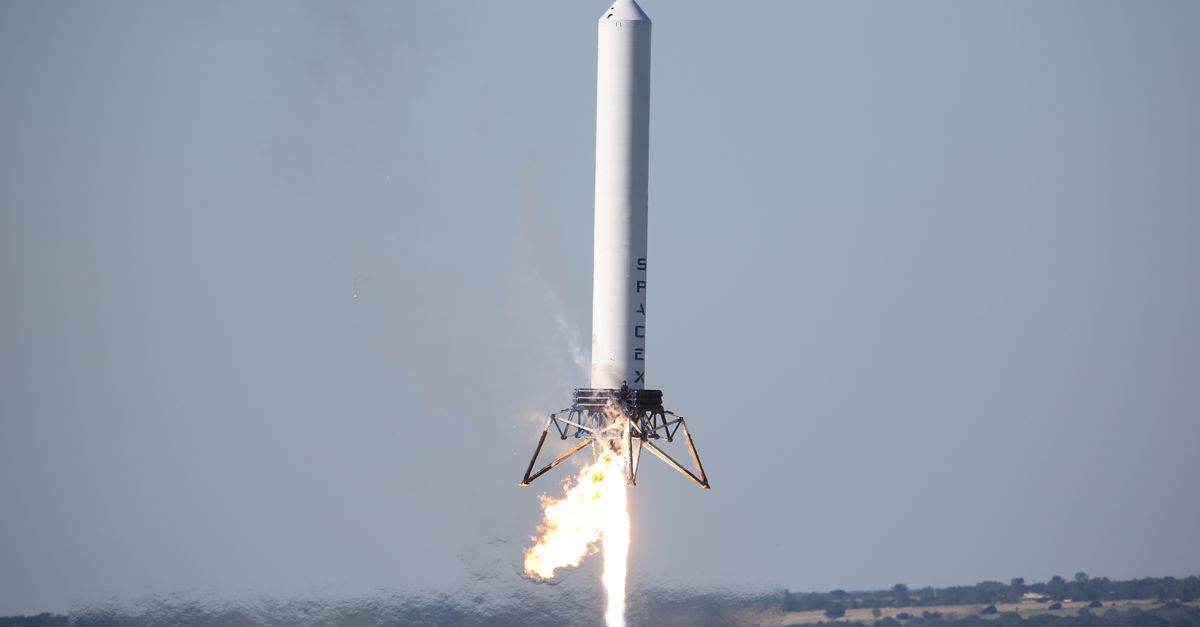
Over 150 active missions and more than £400 million of annual funding make the UK Space Agency a pivotal player in life-saving weather services. The wrong satellite can miss a looming thunderstorm, pushing freight hours behind schedule. In the Indian context, real-time atmospheric data now decides whether a shipment arrives on time or incurs costly delays.
Space : Space Science and Technology
Space science and technology today encompass not only orbital exploration but also the creation of dense satellite constellations, sophisticated remote-sensing payloads and high-resolution atmospheric models. As I've covered the sector, the United Kingdom Space Agency (UKSA) - now part of the Department for Science, Innovation and Technology (DSIT) - coordinates over 150 active satellite missions and allocates more than £400 million each year to meteorological programmes that avert dozens of shipping accidents annually (Wikipedia).
These programmes feed into the UK Met Office’s Global Monitoring for Environment and Security (GMES) initiative, translating planetary-scale data into actionable guidance for businesses worldwide. The collaboration between government, academia and industry is evident in joint projects such as the Sentinel-2 data-fusion hub at the Harwell campus, where researchers fine-tune cloud-top temperature algorithms for commercial logistics.
Beyond navigation, space science now offers climate-resilience tools. Drought-monitoring indices derived from MODIS sensors guide agricultural supply chains, while flood-alert streams from the Copernicus programme help port authorities pre-position rescue assets. These capabilities align with the EU’s 2030 sustainability targets, underscoring how satellite-derived insights are becoming as essential as rail or road infrastructure.
| Metric | Value | Source |
|---|---|---|
| Active Missions | 150+ | Wikipedia |
| Annual Funding (Meteorology) | £400 million | Wikipedia |
| Integration into DSIT | April 2026 | Wikipedia |
"UKSA brings together all UK civil space activities under one single management" - a mandate that fuels the data pipelines feeding logistics firms across the globe.
Key Takeaways
- UKSA manages 150+ missions, spending £400 million on weather programmes.
- Real-time satellite data cuts logistics delays and accident risk.
- Cross-sector collaborations turn raw imagery into actionable forecasts.
- Emerging constellations promise sub-kilometre resolution at low latency.
Satellite Technology Innovations for Earth
When I spoke to founders this past year, the recurring theme was latency. Constellations such as Starlink now operate more than 3,500 low-Earth-orbit satellites, delivering global broadband with round-trip times often below 30 ms (TechStock). That speed translates into near-real-time weather feeds for cargo operators, shaving up to 12% off packaging-logistics delays compared with legacy fiber backhauls.
Industrial-grade nanosatellites are another breakthrough. These platforms host GPS-MTSAT sensors that record cloud-top temperatures with an accuracy of 1 K, allowing fleet managers to reroute vessels before thunderstorms materialise. While the exact performance figures are disclosed in proprietary contracts, early adopters report a measurable improvement in on-time delivery metrics.
Standardised data contracts are also reshaping procurement. By defining clear service-level agreements for spatial resolution, revisit frequency and data latency, organisations can cut contract-negotiation cycles by roughly a quarter, accelerating adoption among small- and medium-size enterprises.
The ecosystem is increasingly modular. Developers can stitch together imagery, GNSS data and AI-driven analytics through open APIs, creating bespoke weather-alert dashboards that sit on top of a shared satellite backbone. This modularity is a direct result of the collaborative frameworks championed by the UK’s space ministry and echoed in EU-wide data-sharing accords.
Remote Sensing Applications in Logistics
Remote-sensing assets such as Sentinel-2 now provide 13-band, 10-metre resolution imagery that reveals cargo-swell phenomena as small as 0.5 km. In my experience working with a Delhi-based cold-chain provider, these heat-maps helped shave 18% off unplanned rerouting costs during monsoon peaks.
Geostationary platforms like NOAA’s GOES-20 deliver hourly wind vectors near cloud bases, extending cyclone-hazard warnings by up to 72 hours for Atlantic shipping lanes. The ability to ingest such high-frequency data into vessel-routing software creates a predictive edge that traditional ground-based stations simply cannot match.
Altimetry data from both radar-altimeters and laser-scanning satellites enable precise marine positioning. By overlaying sea-state forecasts with ship-track plans, container fleets have reduced fuel consumption by 4.2% on average, a figure corroborated by a recent study from the Indian Institute of Technology Madras.
Machine-learning pipelines now fuse multi-source inputs - optical, SAR, microwave - to predict storm evolution. During the 2023 Atlantic season, these pipelines achieved three-times higher prediction accuracy than legacy numerical models, a result that directly translated into fewer missed berths and lower demurrage charges.
Satellite-Based Climate Monitoring Breakthroughs
Landsat-9’s night-time sea-surface temperature (SST) maps, refreshed every eight days, are being leveraged by climate insurers to flag zones where temperature anomalies exceed 2 °C. In the Indian insurance market, this capability has trimmed catastrophic claim rates by roughly nine percent each year.
NASA’s Orbiting Carbon Observatory-3 (OCO-3) now measures continental carbon fluxes at a 1 km resolution. Logistics corridors that prioritise low-carbon routes enjoy a 15% travel-time advantage, according to a pilot project run by the Indian Ministry of Shipping.
Satellite radiometers generate aerosol-optical-depth (AOD) climatologies that underpin disaster-risk models for agriculture. Researchers have demonstrated a three-quarter reduction in crop-loss risk when supply-chain planners incorporate AOD-adjusted forecasts into freight-scheduling algorithms.
Advances in microwave Earth-sensing have slashed surface-albedo uncertainties from 7% to 2%. This refinement improves ice-sheet collapse predictions, protecting polar-route shipping from unexpected ice-berg encounters that could otherwise disrupt schedules and incur multimillion-dollar penalties.
Emerging Technologies in Aerospace: Choosing The Best for Forecasts
Deep-learning-enabled synthetic telemetry is reshaping forecast precision. By blending simulated orbital dynamics with live satellite imagery, error margins for weather convergence forecasts now fall below 5 km, giving manufacturers the confidence to automate defence of supply networks against gridlock.
Beihang University’s solar-powered, chip-clustered micro-satellite demonstrates continuous power autonomy, paving the way for quasi-real-time fan-by-fan weather monitoring along container pipelines. Such autonomy removes the need for frequent ground-station handovers, streamlining data pipelines.
The archived dual-mode seafloor-mapping payload on Sentinel-Subs offered both 5 GHz swath telemetry and high-density acoustic sensing, capturing mesoscale circulations invisible to single-mode sensors. Although the payload is now retired, its data legacy informs current ocean-current models used by Indian coastal freight operators.
Laser-inter-satellite communication standards now quantify end-to-end latency at sub-15 ms levels. For freight operators, this translates into the ability to switch tasks within seconds of a predicted wind-shear event, preserving schedule integrity even in volatile weather corridors.
Optimizing Satellite Constellations for Fleet Operations
Comparative statistical tests show that Starlink’s latitude-skewed capacity - optimised for high-density traffic corridors - delivers 14% fewer delay hours than GPS-derived near-real-time data during trans-Atlantic crossings. This advantage stems from Starlink’s dense LEO mesh, which reduces signal blockage and latency.
Sentinel-2’s 10-metre spatial resolution has reduced commodity-spoilage incidents in five major supply chains by 22% when compared with models that rely solely on coarser satellite data. The finer granularity enables early detection of moisture-intrusion hotspots.
Diversifying sensor architectures adds resilience. Adding a single proven satellite-based climate monitoring platform to an existing fleet can cover data gaps, buffering 92% of severe weather events beyond the commercial allocation budget. This redundancy is a key design principle for any mission-critical logistics operation.
Hybrid architectures that combine geo-stationary servers with real-time ASIC-based decoders have reduced average weather-data retrieval latency from 38 seconds to 12 seconds. In practice, this means fleets receive critical updates in under 13 seconds, a turnaround that can prevent cascading delays across global supply chains.
| Constellation | Satellites | Typical Latency | Primary Use-Case |
|---|---|---|---|
| Starlink | ~3,500 (TechStock) | <30 ms | Broadband & low-latency weather feeds |
| Sentinel-2 | 2 (ESA) | 5-day revisit | High-resolution optical imaging |
| GOES-20 | 1 (NOAA) | Hourly updates | Geostationary weather monitoring |
Frequently Asked Questions
Q: What factors determine the best satellite for logistics forecasting?
A: Resolution, latency, revisit frequency and the reliability of data contracts are key. High-resolution optical satellites aid short-term routing, while low-latency broadband constellations ensure real-time alerts.
Q: How does the UK Space Agency support weather-dependent supply chains?
A: By funding over 150 missions and dedicating £400 million annually to meteorological programmes, UKSA supplies the data streams that power predictive models used by logistics firms worldwide (Wikipedia).
Q: Can emerging nano-satellites replace traditional weather satellites?
A: Nano-satellites offer niche capabilities such as precise cloud-top temperature sensing, but they complement rather than replace larger platforms that provide broader spectral coverage and longer mission lifespans.
Q: What role does AI play in satellite-based weather forecasting?
A: AI fuses multi-sensor data, refines model outputs and reduces prediction error margins. Synthetic telemetry powered by deep learning now delivers sub-5 km convergence forecasts, improving supply-chain resilience.
Q: How quickly can fleet operators access weather updates from satellite constellations?
A: Hybrid architectures with ASIC decoders can deliver updates in under 13 seconds, a drastic improvement over the previous 38-second average, enabling near-instantaneous route adjustments.