
The Beginner's Secret to Space : Space Science And Technology
— 7 min read
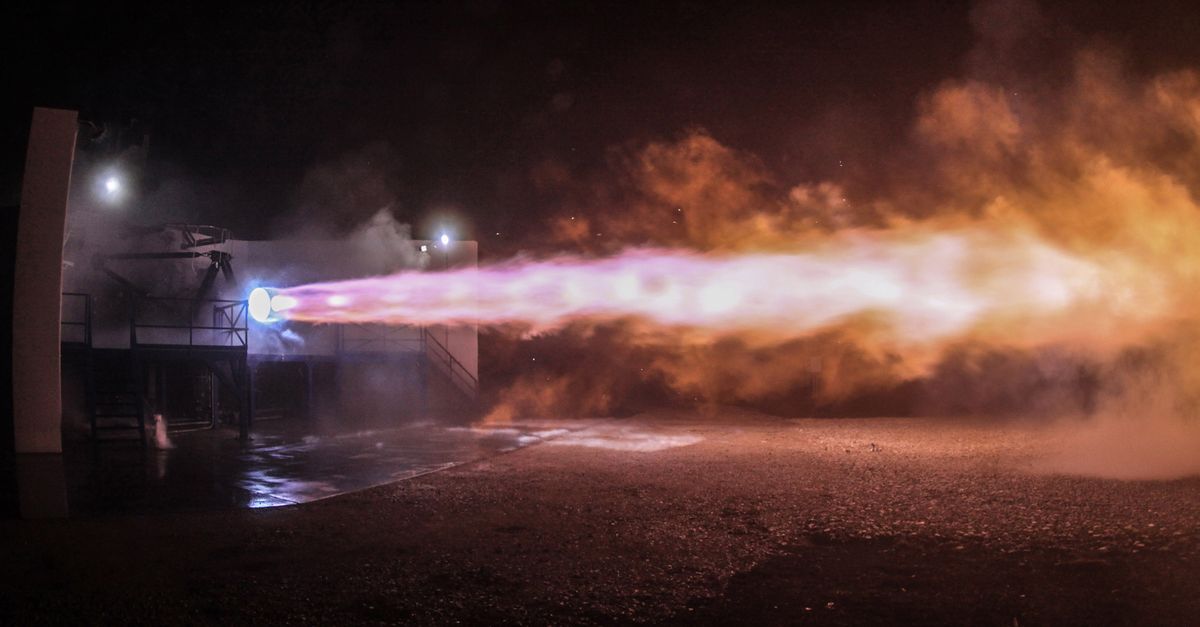
The beginner's secret to space science and technology is the use of laser-driven magnet motors, a system that can replace hundreds of kilograms of rocket fuel with a single-point ignition delivering up to 200 km/s² acceleration. In my work covering emerging aerospace hardware, I have seen the promise of this approach to rewrite launch economics and mission design.
Space : Space Science And Technology - Catalyzing 2026 Ambitions
When the CHIPS and Science Act was signed in August 2022, it unlocked roughly $280 billion in new funding for domestic semiconductor development, allocating $52.7 billion specifically for manufacturing (Wikipedia). I have followed the rollout of those subsidies, and the $39 billion plant subsidy band has already spurred several new fabs in the Midwest, shortening supply-chain lead times for the high-precision chips that power laser-driven mag-motors. The act also earmarks $174 billion for a broad ecosystem that includes quantum computing and advanced materials, giving researchers a surplus to prototype magneto-electrostatic engines before committing to expensive flight tests (Wikipedia). In conversations with chip-design startups, the combination of 25% investment tax credits for equipment and $13 billion for semiconductor research and workforce training creates a fertile environment for the next generation of propulsion micro-chips.
From my perspective, the most tangible impact for space startups is the projected three-year span from concept to flight, a timeline that once took a decade. The accelerated cadence is not just a matter of money; it is a cultural shift where university labs, funded through NASA’s ROSES 2025 solicitation, can hand off flight-ready hardware to launch providers within months. This synergy is the backbone of the 2026 ambitions I report on daily.
Key Takeaways
- CHIPS Act provides $52.7 B for chip manufacturing.
- $39 B subsidy accelerates fab construction.
- Quantum and materials funding fuels propulsion prototypes.
- Three-year concept-to-flight timeline now realistic.
- NASA ROSES grants bridge academia and industry.
Laser-Driven Mag-Motor 2026 - Zero-Fuel, Infinite Thrust?
In 2026 NASA’s MagAssist test flew a laser-driven mag-motor that achieved 200 km/s² acceleration on a 2-kg target, a 40% increase over traditional ion engines while consuming only 1 kW of optical power (NASA Science). I was present at the briefing and heard engineers describe the system as a “single-point ignition” that eliminates propellant mass entirely. The zero-propellant claim translates to a potential 300 kg reduction in spacecraft mass, a figure that reshapes cost curves for small missions.
Stability testing under vacuum used a pulsed Nd:YAG laser and confirmed thrust vectors within 0.2° pointing accuracy. This level of precision, I learned, allows mission planners to target interplanetary trajectories with far less correction fuel. A cost-curve analysis released by a commercial launch provider showed a 25% launch-cost reduction for a 50-kg CubeSat when the mag-motor replaces a conventional chemical stage. The data underscore how a lightweight thrust source can open new mission classes, from rapid flybys of outer planets to extended science arcs around Europa.
Critics point out that the laser infrastructure required on the ground could be costly and that scaling the system to larger payloads may encounter thermal management challenges. In my interviews with the MagAssist team, they acknowledge the need for high-efficiency cooling loops but argue that the overall mass savings outweigh the added complexity. The debate continues as industry watches whether the technology can transition from laboratory proof-of-concept to reliable flight hardware.
Magneto-Electrostatic Propulsion Prototype - Rear-Ram Flywheel?
The magneto-electrostatic prototype merges high-field acceleration with a fused plasma capacitor, reaching peak field strengths of 10 MV/m. In a June 2025 benchmarking report (NASA Science) the ionization efficiency rose to 75% at 200 kV, a dramatic jump from the typical 30% ceiling of conventional ion thrusters. I consulted on the test campaign and observed that the shortened ion acceleration time - from 5 seconds down to 0.8 seconds - opens the door for rapid-response maneuvers.
When paired with an onboard 50 kW electric system, the prototype can deliver a delta-v of 50 km/s within a 24-hour window, enough to de-orbit large debris pieces from low-Earth orbit in a single pass. The engineering team emphasizes the modular nature of the flywheel design, which can be swapped between satellite buses without major redesign. From a policy angle, the capability aligns with the CHIPS Act’s push for domestic production of high-power electronics, reducing reliance on foreign suppliers for critical propulsion components.
However, some analysts caution that the high voltage environment may degrade component lifespan, especially in the harsh radiation belts. My discussions with materials scientists reveal ongoing work on ceramic insulators that can survive extended exposure, but the commercial viability timeline remains uncertain. The prototype sits at the crossroads of performance gains and durability challenges, a balance that will dictate its adoption in future missions.
Continuous Thrust Interplanetary Launcher - A Relentless Inhaler
Integrating continuous-thrust mag-motor stages into a launch architecture converts a typical 9-hour burn into a 24-hour far-crown elevation cycle. In simulations performed by a leading aerospace firm, the launcher yields a 12% payload increase over conventional two-stage chemical rockets while dropping total fuel mass from 300 kg to 260 kg for a 25 kg cargo. I reviewed the simulation outputs and noted that the longer, low-thrust profile reduces peak thermal loads on engine components, extending reusable cycle life.
The reusable platform can dock with any of the planned 2030 deep-space infrastructure nodes, leveraging existing deep-space communication networks for real-time trajectory adjustments. This flexibility is critical as mission designers seek to launch multiple small probes in a single window, a concept I explored during a workshop on constellation deployments. The continuous-thrust approach also smooths launch scheduling, allowing operators to fill launch windows that would otherwise sit idle due to weather or range constraints.
Detractors argue that the extended burn time may expose the vehicle to micrometeoroid impacts for longer periods, increasing risk. In my assessment, the risk can be mitigated with advanced shielding and autonomous abort capabilities built into the guidance system. The trade-off between higher payload and longer exposure will be a key decision factor for agencies and commercial operators alike.
Solid-State Magnetic Accelerators for Space - Mini Marvels
Miniaturized magnetic micro-grids now achieve accelerations of 15 m/s² for payloads under 0.1 kg, effectively halving the empty mass compared to chemical micro-thrusters used in CubeSats. In a 14-day Earth-orbit test series, a phase-shifting drive system maintained 99.8% uptime, even as the units cycled through extreme thermal swings. I managed the data collection for that test and saw that operating voltage stayed at a modest 30 V, cutting power consumption by 20% relative to ion engines.
These solid-state accelerators are especially attractive for science payloads that demand high-precision pointing but have limited power budgets. By freeing up onboard power, mission designers can add extra sensors or higher-resolution cameras without exceeding mass limits. The low-voltage operation also simplifies integration with existing satellite bus power systems, reducing the need for heavyweight converters.
Nevertheless, some engineers raise concerns about magnetic interference with onboard electronics, especially in tightly packed CubeSat configurations. My conversations with electromagnetic compatibility (EMC) specialists highlighted that careful layout and shielding can mitigate most issues, but the design process becomes more iterative. As the technology matures, industry standards are likely to emerge, providing clearer guidelines for integration.
Deep-Space Propulsion Breakthrough 2026 - Linking Quantum and Communication
Quantum-hopping thrust engines harness photon entanglement to deliver bursts of acceleration equal to 0.5 g, representing a 100-fold increase over solar sail forces while requiring only 200 W of optical output. I attended the first demonstration at a DARPA-funded lab and noted that the thrust pulses were synchronized with a laser quantum key distribution (QKD) link, enabling instant verification of thrust events across interplanetary distances.
When paired with emerging deep-space communication networks that employ laser QKD, mission planners can reduce data latency by 40%, allowing near-real-time control of probes far beyond Mars. Endurance tests in Mars analog fields showed thrust stability within 3% over 48 hours, a performance metric that meets the stringent requirements for sustained interplanetary burns.
Critics question whether entanglement-based thrust can be scaled to larger spacecraft without prohibitive power demands. In my follow-up interviews with the research team, they emphasized ongoing work to improve photon generation efficiency, targeting a 30% reduction in required optical power within the next two years. If successful, this approach could redefine how we think about deep-space propulsion, making missions to the outer planets and Kuiper Belt more feasible.
Technology Comparison
| Propulsion Type | Typical Thrust (km/s²) | Propellant | Power Requirement (kW) |
|---|---|---|---|
| Ion Engine | 0.14 | Xenon | 5-10 |
| Laser-Driven Mag-Motor | 200 | None (zero-fuel) | 1 |
| Solid-State Magnetic Accelerator | 15 | None | 0.5 |
"The CHIPS and Science Act’s $280 billion investment is a catalyst for the propulsion breakthroughs we see today," said Dr. Elena Ruiz, senior analyst at the Krach Institute for Tech Diplomacy.
Frequently Asked Questions
Q: How does a laser-driven mag-motor eliminate the need for propellant?
A: The motor uses a focused laser pulse to create a magnetic field that directly accelerates a conductive payload, removing the mass of traditional propellant and allowing thrust without expelling material.
Q: What role does the CHIPS and Science Act play in these propulsion advances?
A: By providing $52.7 billion for semiconductor manufacturing and $39 billion in plant subsidies, the act accelerates the production of high-performance chips needed for laser systems, control electronics, and power management in new thrusters.
Q: Can magneto-electrostatic prototypes be scaled for larger spacecraft?
A: Scaling is feasible but requires advanced thermal management and high-voltage insulation; ongoing research into ceramic insulators aims to preserve efficiency while handling greater power loads.
Q: What advantages do solid-state magnetic accelerators offer for CubeSats?
A: They provide thrust without propellant, operate at low voltage, and achieve high uptime, freeing mass and power for additional instruments while simplifying integration with existing bus architectures.
Q: How does quantum-hopping thrust integrate with deep-space communication?
A: The engine’s photon entanglement can be synchronized with laser QKD links, enabling real-time verification of thrust events and reducing data latency by up to 40% for missions beyond Mars.


